

The Golden Age of Hackers Has Arrived — And Vibe Coders Built It
AI gave everyone the power to ship software. It also handed hackers the easiest target environment in history. Every prompt-and-pray prototype is a free lunch — and the bill is starting to land.
Heartbyte Team
Engineering & Strategy
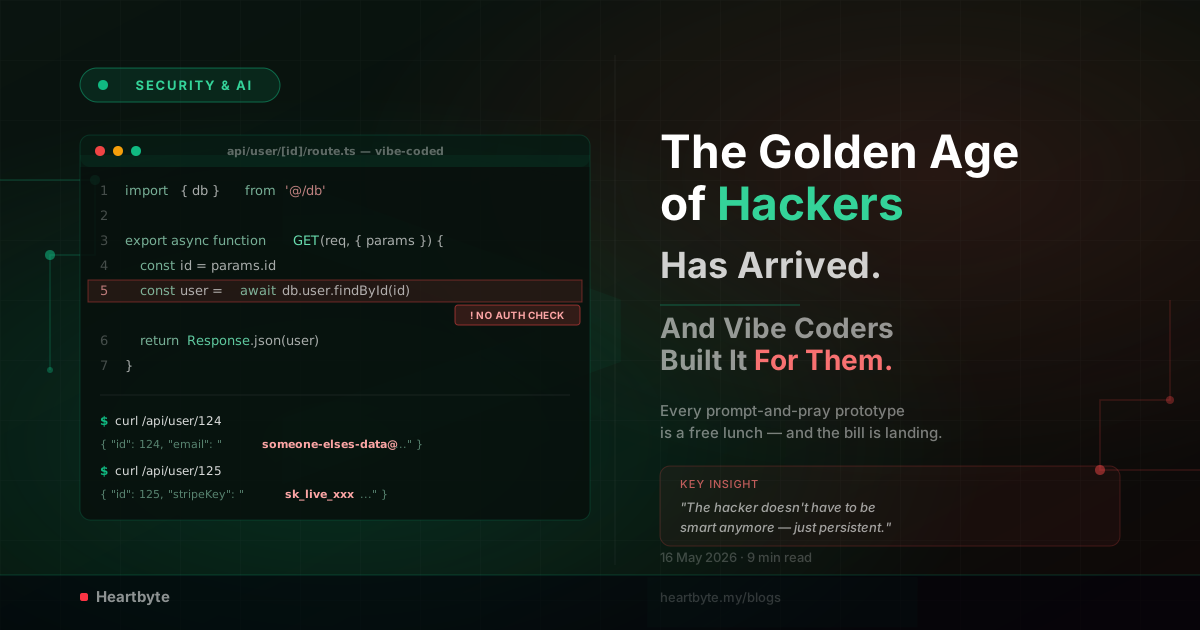
A founder messaged us last week in a panic. His "AI-built" SaaS was three weeks old, had 200 paying users, and was making real money. Overnight, it got wiped clean. Customer data dumped to a Telegram channel, Stripe keys leaked, database gone. He didn't know how, didn't know who, and didn't even know what to ask.
We looked at the code. The API endpoint that was supposed to log users in just took the user ID straight from the URL. No token check. No session check. GET /api/user/123/data gave you user 123's data. GET /api/user/124/data gave you user 124's. A teenager with curl could empty the whole database in twenty minutes, and someone did.
"He didn't know it was broken because the AI never told him it was broken. It just gave him code that ran."
This isn't a one-off. This is 2026. We're living through the best time to be a hacker in the history of software, and the people who made it that way aren't security researchers or foreign spy agencies. They're regular people shipping live code from chat prompts, with no idea what's actually running.
The attack surface just exploded
Before AI coding tools, building a real app took months. You had to hire engineers, or be one, or at least stick it out long enough to understand what you were typing. That learning curve kept most people out. The ones who did ship code to the internet had usually been through at least one production disaster and learned from it. Software had maybe a few million people doing it, and most of them had at least heard of "SQL injection."
Today, anyone with a credit card and a Cursor subscription can ship an app to production over a weekend. The filter is gone. The number of people putting apps on the internet has gone up something like 50× in three years, and the typical experience level has dropped to "I asked Claude what authentication was yesterday." Every one of those apps holds user data and takes payments, and most are one prompt-shaped hole away from ending up on a Telegram leak channel.
What 2026 looks like for an attacker
- ▸ More targets than ever. Tens of thousands of new apps ship every week, and most never get a security review.
- ▸ Predictable holes. AI models repeat the same weak patterns across millions of codebases. Find one bug, and you've found a thousand.
- ▸ Owners who can't react. The "developer" who shipped it can't read their own code. Warnings get ignored. Fixes never come.
- ▸ Real money inside. Stripe keys, customer data, sometimes whole banking integrations, all sitting behind code the founder doesn't understand.
It's an all-you-can-eat buffet. Hackers used to grind through obscure CVEs and tweak their tools for weeks to pull off a single attack. Now they run automated scans against fresh Vercel deployments and find their next payday before lunch.
The same five bugs, shipped a million times
The dark joke is that the holes AI-generated code ships aren't new. They're the same holes the security industry has been shouting about for twenty years. OWASP wrote a list, and that list hasn't changed. We're just shipping more of it, faster, to more places.
The greatest hits — now playing on a thousand vibe-coded apps
Broken access control (a.k.a. "the URL is the security").
The number 1 web hole of the last six years. AI-generated endpoints grab an ID from the URL and hand back whatever's there. Change the number, get someone else's data. We see this on about half the AI-built apps we audit.
Exposed secrets in the frontend.
Live Stripe keys hardcoded into React components. Database passwords shipped in the JavaScript bundle. AWS keys in .env files pushed to public GitHub. "It works on my laptop" was never a security plan.
SQL injection's awkward comeback.
It was supposed to be dead. Frameworks killed it. Then AI started gluing strings into queries because some old Stack Overflow answer in its training data did. Welcome back to 2008. Bring a friend, and bring all your customers' data.
Authentication that isn't.
JWTs signed with the word "secret". Password resets that take an email and just trust it. Cookies with no HttpOnly, no Secure, no SameSite. The login form works. Everything around the login form does not.
CORS set to * because "it was failing."
The classic vibe-coder move. The browser blocks a request, you tell the AI to "fix the CORS issue," and it opens the door to the entire internet. Now any bad site can talk to your API as your logged-in user. Problem solved, sort of.
None of these are new or clever, and none of them need a hacker in a hoodie with a hex editor. They need curl, twenty minutes, and the nerve to try the obvious thing.
Why AI ships insecure code (and probably always will)
It's tempting to think this fixes itself. The models get better, the newer ones learn about OWASP, the IDE starts warning you. Surely, at some point, AI will write secure code on its own.
We don't think so. The models are good enough already. The problem is how people use them.
"Security is not something you generate. It's something you defend. AI generates. Vibe coders don't defend."
Security is a habit, not a feature. It's asking, every time you write code: what happens if someone sends something I didn't expect? The AI can answer that, sometimes really well, if you ask it. The trouble is vibe coders never ask. They say "build me a login page" and they get a login page. They don't say "what's wrong with this login page if an attacker pokes at it?" because they don't know that's even a question.
And even when the AI gets it right on day one, software changes. The model writes solid rate-limited code in week one. In week two the founder asks for "a new endpoint just like the others, but for admin actions." The AI happily copies the old pattern and drops the rate limiting, because the prompt didn't mention it. The vibe coder ships it, the hole opens, and nobody knows.
Security is the part of software you can't actually see. It's bad things not happening. You won't spot it in the demo or in the prompt. You only see it when someone tries to break the thing, and that's the one test the vibe coder never runs.
The new economics of getting hacked
It used to take real skill to break into a serious app. The bar was high enough that you had to be a real hacker, or find a real bug, to pull off a breach worth talking about. The maths favoured the defender, because attacking took far more effort than defending.
AI flipped that. Defending still takes the same skill it always did: good judgment, thinking like an attacker, careful code review. But attacking got cheap. You can scan thousands of new deployments a day with a small Python script, and you can prompt an AI to find the bugs in someone else's prompt-generated code. The attacker uses AI too. The difference is that their AI doesn't have to ship working software. It only has to find one mistake.
The cost of attacking dropped 100×.
Automated tools scan, find, and exploit at machine speed. A bug bounty hunter who used to file three reports a week can file thirty. A criminal group can run a campaign across thousands of fresh targets without adding a single person.
The number of soft targets exploded.
For every Stripe or Cloudflare, there are now ten thousand small SaaS apps built by people who don't know what a CSRF token is. The attacker doesn't need to crack the hard target. They just pick from the easy ones.
The payoff per breach went up.
Vibe-coded apps hold real money: Stripe keys, payment integrations, customer financial data, sometimes even direct bank access through fintech wrappers. A teenager with a curl command can now drain accounts that, ten years ago, would have taken a serious wire fraud operation to touch.
The Malaysian SME problem
We see this most with Malaysian SMEs who got sold "an AI-built solution" by a vendor charging a fraction of the normal rate. The pitch is hard to say no to: same software, 70% cheaper, six weeks instead of six months. What the buyer doesn't see is that the savings come from skipping the parts you can't see, like testing, monitoring, and yes, security.
Six months later, that same SME is on the phone with us. The system is leaking customer data, or it got ransomwared, or someone abused an API endpoint to spam from the company's domain. The vendor has gone quiet. The "developer" who shipped it can't read the code anymore. Fixing it after a breach costs many times what doing it properly would have cost up front, and that's before you add the breach itself, the damage to your name, and in some industries the fines.
"You saved RM50,000 on the build. You spent RM300,000 on the breach. The cheapest line item on your P&L last year was the most expensive one this year."
What actually protects you
We're not anti-AI. We use these tools every day. The problem is AI writes code with nobody watching the door. Real software, especially software that holds customer data or money, needs someone watching that door: a person who thinks like an attacker, knows the difference between who you are and what you're allowed to do, and has seen what production looks like when it goes wrong.
A short defender's checklist
- ▸ Treat every input as an attack. Every URL parameter, form field, file upload, header. The AI won't assume bad intent. You have to.
- ▸ Never trust the frontend. Permissions live on the server. A user seeing the admin page in their browser is fine, as long as the backend says no to every admin action they try.
-
▸
Secrets live in the server, period. No Stripe live keys in React. No credentials in
.envcommitted to GitHub. Use a secrets manager. - ▸ Have someone read it. A security review by a person who didn't write the code is worth more than every prompt you'll ever type. Even a one-day audit catches the obvious 90%.
- ▸ Assume you'll get breached. Logs, alerts, rate limiting, backups, a plan for when it happens. You can't stop every attack. The goal is to notice fast and recover before it ruins you.
None of this is fancy, and none of it is expensive next to the cost of a real breach. It's just the boring engineering work that vibe coding skipped. It doesn't feel like progress because it's about stopping something bad rather than building something you can show off.
The bill is coming
Security people will remember 2026 as the year the dam broke. The first wave of vibe-coded SaaS hit the internet in 2024, and it's been running for two years now. The bug bounty world has caught on. The criminals have caught on. The regulators are getting there. Every week, another founder finds out the code their AI shipped a year ago has a hole you could drive a truck through, and they have no team, no plan, and no idea what to do.
This is the golden age of hackers, and they didn't build it, fund it, or lobby for it. We built it for them. The industry, the founders, the vendors, everyone who confused "shipping code" with "shipping software." And the bill, for a lot of these systems, is going to land before the founder even finishes paying off the build.
"The hacker doesn't have to be smart anymore. They just have to be persistent. The AI on your side was prompted once. The AI on theirs scans you every day."
If you've got a vibe-coded app live right now, the question isn't whether it has these bugs. The question is whether you find them first, or someone else does.
Worried your AI-built app might be one curl command away from disaster?
We do honest security audits for AI-generated and human-written code alike. No FUD, no upsell — just a real look at what's exposed and what it would take to close the holes. Fixed price. Real engineers. Findings you can actually act on.
Get a Security ReviewHeartbyte Team
Heartbyte is a bespoke software development company based in Malaysia. We build web, mobile, and custom software for ambitious businesses — with 15+ years of combined engineering experience and zero change request fees, guaranteed.