

No Data, No AI — Stop Saying You're 'Going AI'
Without data, your AI has no advantage — it can only produce the same generic output as everyone else using the same tools.
Heartbyte Team
Engineering & Strategy
You've sat in this meeting. Everyone has. Someone senior stands up, points at a slide, and says: "We need to start using AI." The room nods. A task force gets formed. A vendor gets called. Budget gets approved. Nobody asks the obvious question.
What data are we going to feed it?
This is happening in boardrooms all over Malaysia right now. Everyone wants AI, and almost nobody is ready for it. The gap between wanting AI and actually using it well isn't a technology gap. It's a data gap and a process gap. It's the gap you get when you've run on spreadsheets and gut feeling for fifteen years.
The Misconception: AI Equals Instant Intelligence
Most business owners think you buy an AI tool, plug it in, and your business suddenly gets smarter. Faster decisions, better forecasts. The vendor demo looked amazing. It answered questions, made reports, and predicted trends.
What the demo didn't show you is that the AI was fed clean, tidy, well-organised data. Your company doesn't have that. You've got three different versions of the same customer list across two departments. Sales figures in one Excel file and costs in another, kept by different people who name things differently. And five years of data that nobody has ever tidied up, let alone cleaned.
"If your AI runs on the same public data as everyone else, you'll get the same results as everyone else. The edge isn't the AI — it's your data."
Tools like ChatGPT, Microsoft Copilot, and Google Gemini are open to everyone, so your competitors use the exact same ones. The field is already level. The one thing that would make AI useful for your business, and give you a real edge, is your own internal data. Most companies don't have it in any usable shape.
AI Is Only as Good as Your Data
AI doesn't make smarts out of thin air. It multiplies what's already there. When your data is organised, consistent, and complete, AI can do amazing things: spot patterns, predict outcomes, automate decisions. When your data is messy and scattered, AI multiplies that just as well. Garbage in, garbage out, but faster.
AI is only as good as:
Your internal data
Customer records, transaction history, operational logs, email trails — the information only your business has.
Your workflows
How your teams actually work — the steps, handoffs, approvals, and odd exceptions that make up your day-to-day.
Your historical records
Past decisions, outcomes, trends, and patterns that only live inside your company's memory.
Most companies have none of this in a form AI can actually use. They have Excel files emailed back and forth, data trapped in systems that don't talk to each other, and know-how stuck in people's heads instead of a database. Then they wonder why the AI tool they just paid for isn't working miracles.
Why Most Companies Are Stuck Here
This isn't a new problem. It didn't show up when AI got trendy. It's been building for years, sometimes decades. The data mess is there because companies made sensible short-term choices that piled up into a long-term headache.
Systems built without real users
Management decided what they wanted to see in reports. Nobody asked the operations team what data they actually record or how. The system was built around a perfect workflow that doesn't match real life, so the team works around it, and the data in the system stops being reliable.
Data scattered across departments
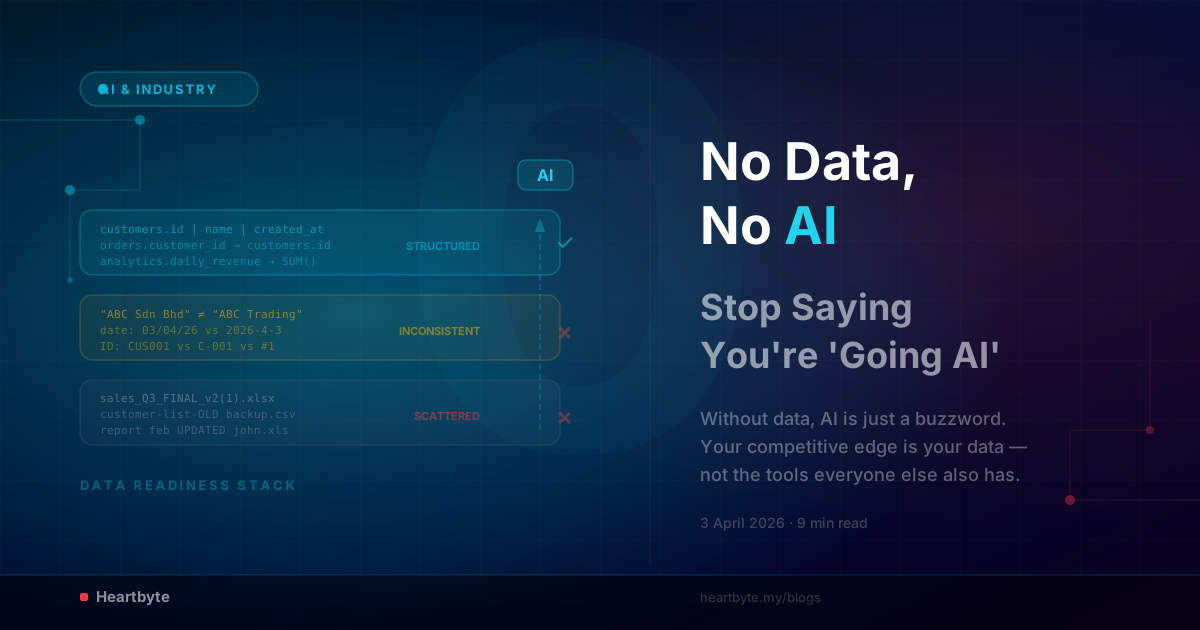
Sales has their own tracker. Finance has theirs. Operations runs something else entirely. Nobody agreed on customer IDs, product codes, or even date formats. The same customer might be "ABC Sdn Bhd" in one system and "ABC Trading" in another. Merging this data is a nightmare, and until you do, AI only sees pieces instead of the whole picture.
No standardisation
There's no single source of truth, no agreed list of terms, no agreed format for how things get entered, stored, or sorted. Every team, every branch, every person does it their own way. This isn't laziness. It's what happens when you grow a business without ever putting money into the data side of it.
Management-driven assumptions
The call to "go AI" was made in a meeting where nobody who touches data daily was in the room. The people who know the data is broken weren't asked, and the people who signed off on the budget assumed the data was fine, because the monthly reports they see look clean enough. They have no idea those reports take three people two days to put together and reconcile by hand.
The Real Cost of Jumping into AI Without Data
When companies push ahead with AI projects without a solid data base under them, you can guess how it ends, and it's expensive.
What actually happens:
AI initiatives stall or fail entirely
The trial worked on demo data. Once real company data goes in, the results are wrong, inconsistent, or just useless. The project gets shelved without a word.
Money wasted on tools that don't deliver
Subscriptions, licences, consulting fees, integration costs — tens or hundreds of thousands spent on AI tools that sit unused because there's no good data to feed them.
No real automation or insights
The promise was automated reports, smart predictions, slick workflows. What you get is the same manual work with a new dashboard nobody trusts.
This is not a technology problem. It's a data and process problem. You can't solve a foundation issue by adding a roof.
The vendors won't tell you this because they're selling the roof. The consultants won't tell you because they're billing by the hour to put it up. Management doesn't want to hear it either, because "fix our data" is a far less exciting project than "deploy AI." Doesn't change the fact, though. Ignoring it is how companies burn through six-figure budgets with nothing to show for it.
What Companies Should Actually Do First
If you're serious about using AI, and not just conference-talk serious, this is the order to do things in. It isn't flashy and it won't make a good LinkedIn post, but it works.
Fix your data structure
Take stock of what data you actually have, where it lives, and what shape it's in. Pick one single source of truth. Set some rules — how things are named, formatted, and sorted. Boring work, but every AI project that works is built on top of it.
Build systems around real workflows
Stop building tools around what management wants to see in reports. Build them around how your team actually works. When the system fits the workflow, people use it, and the data they record stays consistent. Consistent data is what makes AI possible in the first place.
Ensure data consistency across the business
Every department, every branch, every team should record data the same way, in the same system, with the same definitions. That means joining things up and training people, and sometimes swapping three different tools for one that everyone actually uses.
Only then layer AI on top
Once you have clean, organised, consistent data flowing through systems your team actually uses, AI finally has something to work with. It can find real patterns, make real predictions, and become the edge you were promised.
"The companies winning with AI today didn't start with AI. They started with clean, organised, consistent data — and built systems that captured it as a normal part of the daily workflow."
AI Is Not Your Starting Point. Data Is.
The AI hype is real, and the tools really are powerful. But a powerful engine with no fuel doesn't move. The fuel for AI is your data. Not public datasets or generic training data, but the specific, organised, historical data that only your business has.
If your data is spread across spreadsheets, stuck in people's heads, or buried in systems nobody trusts, then AI isn't your next move. Fixing the data is. So is building systems that capture it properly and getting your team to actually use them.
Without data, AI is just a buzzword, and buzzwords don't bring in revenue, cut costs, or give you an edge over your competitors. Clean, well-captured data does that. AI just makes it faster.
Ready for AI? Start with your data.
We help businesses build the data foundations that make AI actually work — custom systems designed around your real workflows, capturing the right data from day one. No hype. No buzzwords. Just systems your team will use.
Talk to Us About Your DataHeartbyte Team
Heartbyte is a bespoke software development company based in Malaysia. We build web, mobile, and custom software for ambitious businesses — with 15+ years of combined engineering experience and zero change request fees, guaranteed.