

The IT Project Trap That Companies Can't Escape
IT projects are long, painful, and expensive, and the industry is designed to keep it that way. Here's why client-first software is the only way out.
Heartbyte Team
Engineering & Technology
If you've ever tried to build custom software for your company, whether it's an internal system, an automation tool, or a customer portal, you know the feeling. That slow, sinking moment when you realise the simple project you signed up for has turned into a black hole of time, money, and stress.
You're not alone. In every industry, businesses big and small are learning the same hard lesson. Starting an IT project is the easy part. Finishing one without blowing your budget or your sanity is where it falls apart.
This is a problem with the industry, not the technology. And it's time someone said it out loud.
The Promise: "Yes, We Can Do Everything"
It starts with a pitch meeting. You sit down with an IT company and explain what you need. Maybe it's an inventory system, a CRM that fits your sales workflow, or automating a manual job that's been eating your team's time for years.
Whatever you describe, the answer is always the same: "Yes, we can do that."
You mention a feature. Can do. You mention integration with your existing tools. Can do. You mention a timeline. Can do. You mention your budget. Can do.
Every IT vendor knows this script by heart. They nod, they smile, they tell you what you want to hear. They show you a portfolio of good-looking projects. They talk about agile and the latest tech. They make your project sound easy: a few months, a fixed budget, and you're done.
What they don't tell you:
Saying "yes" to everything is easy when the real costs come later. The first contract is just the door. The real money is behind it: the change requests, the gaps in scope, the "Phase 2" talks.
Phase 1 Launches. Then Reality Hits.
Say the project does make it to Phase 1. The system launches. It works, mostly. Some things are just what you asked for. Others are close but not quite right. A few things are missing completely, but you didn't catch them during requirements because you'd never built software before.
Now you start using it. And like anyone who has used real software in a real business, you start getting ideas. The reports need one more filter. The approval flow should work differently for some departments. The dashboard would be far more useful if it showed the data another way.
These aren't crazy new features. They're the small fixes you only spot once you're actually using the thing, the stuff you couldn't have known before it existed.
So you call your vendor. And that's when you hear the words that change everything.
"That's outside the original scope. We'll need to raise a change request."
The Cost Spiral Nobody Warned You About
Every new idea, every improvement, every "can you just add this small thing" comes with a price tag. And it's not a small one. Some change requests cost more than whole modules in the original project.
What it actually looks like:
Phase 1 costs RM80,000. You launch. The system works, but it's not quite right.
You request improvements. The vendor quotes RM45,000 in change requests, more than half the original project.
You need a "Phase 2" to add the features that should have been there from the start. Another RM60,000–100,000.
Your RM80,000 project is now RM200,000+ and still not what your business actually needs.
This isn't an exaggeration. It's what happens to plenty of businesses, from small SMEs to mid-sized companies. The first quote is just a foot in the door. The real money comes from everything after it.
Switching Vendors? Good Luck.
At some point you've had enough. You decide to find a different vendor. Someone better. Someone who actually gets what you need. So you start reaching out, explaining your situation, showing them your existing system.
And this is where the trap tightens.
Most vendors won't take it
The moment a new vendor hears "we have code from another agency," most of them politely say no. They don't want someone else's code, someone else's design choices, and someone else's mess to clean up. For them it's messy, risky, and not worth the money.
Those who do will charge a premium
The few vendors who will take over an existing project quote you a lot more, sometimes 2x or 3x what a fresh project costs. Why? They need weeks just to read and understand the old code before they write a single new line. That study time alone costs tens of thousands.
Some will suggest starting over
The worst case: a new vendor looks at the old code and says "it's cheaper to rebuild from scratch." You've spent RM100,000+ and you're back to zero. The money you put in is gone.
The Impossible Decision
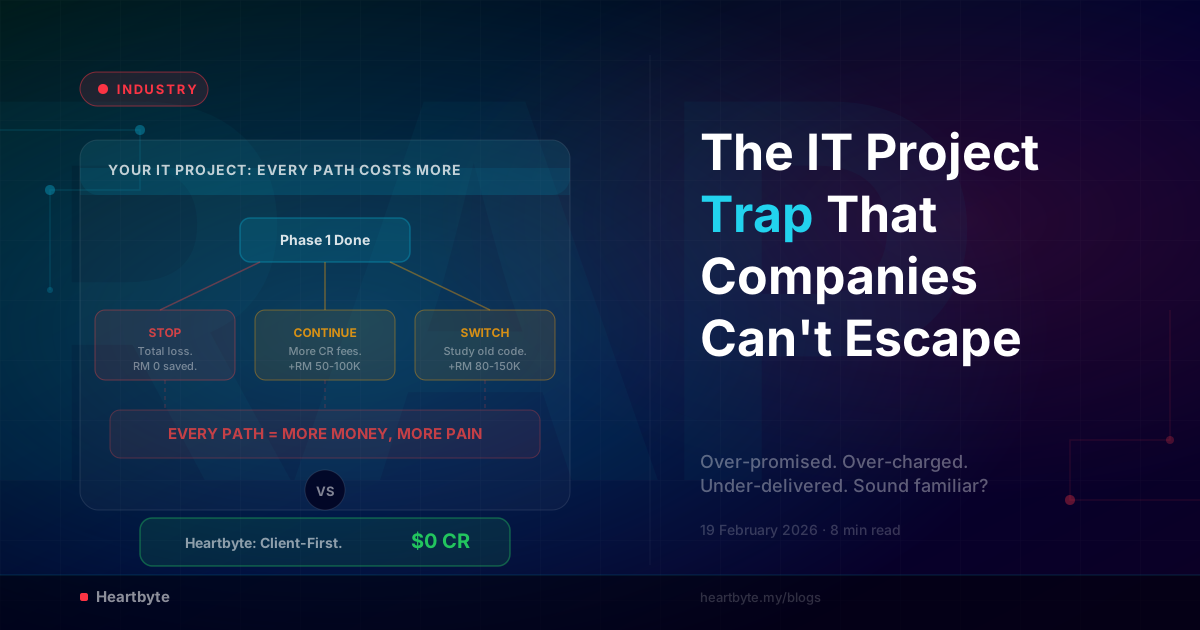
This is where companies get stuck. It's not a small headache. It's a real bind where every option costs serious money and none of them feel right.
Stop the project
Total loss. The time, the money, and all the work your team put into gathering requirements and testing is wasted. They go back to the manual work they were trying to get away from.
Continue with the same vendor
Pour more money into a vendor you've already stopped trusting. Hope the costs stay sane this time. Worry you'll be right back here in six months, just with a bigger bill.
Switch to a new vendor
Pay extra for someone new to study the old code. Risk another vendor who promises a lot and delivers little. Maybe end up rebuilding everything from scratch at 2x the cost.
Use the half-cooked system as-is
Live with a system that's 60% of what you need. Handle the missing bits by hand. Watch your team lose faith in the tool that was supposed to make their lives easier. The system is there, but it doesn't really serve the business.
Every option is expensive and painful. The company that just wanted to modernise is now spending more energy babysitting a failed IT project than running its actual business.
Why This Keeps Happening
This isn't bad luck. It's built into how the IT services industry works, everywhere.
Vendors are incentivised to under-scope
A lower first quote wins the contract. The real profit comes from CRs, Phase 2 proposals, and maintenance fees. The thinner the original scope, the more they make over time.
Over-promising is rewarded
The vendor who says "yes, we can do everything" wins the deal. The one who says "let's be real about what RM80,000 buys you" loses to the one who promises the moon. In this market, being honest works against you.
Switching costs create lock-in
Once a vendor builds your system their way, in their stack, you're stuck. Moving to anyone else means paying them to learn the old system first. They lock you in by making things complicated, and they do it on purpose.
Client-First Software: The Model That Needs to Win
We think the industry is starting to turn a corner. Companies are getting smarter. They share their horror stories and ask harder questions before signing anything. And they're starting to want something different.
We call it client-first software development. And we think it'll be the norm within a few years, not the exception.
What client-first actually means:
This isn't wishful thinking. It's a better business model. When clients trust their vendor, they stay longer, refer others, and build bigger projects over time. A happy client is worth far more over the years than squeezing RM5,000 out of one change request.
What We're Doing Differently at Heartbyte
We started Heartbyte because we've seen, from the inside, what the old model does to clients. We've watched businesses burn through six-figure budgets and end up with systems that don't serve them. We've taken over code that was built on purpose so nobody else could maintain it. We've sat in meetings where "scope" was used as a club against the people paying the bills.
So we made a decision: $0 for change requests. Always.
Traditional IT Vendor
- ✕ Low initial quote, high CR fees later
- ✕ "Yes we can do everything" upfront
- ✕ Every refinement is a new invoice
- ✕ Code designed for vendor lock-in
Heartbyte
- ✓ Honest pricing that includes iteration
- ✓ Realistic about what the budget covers
- ✓ $0 change request fees, guaranteed
- ✓ Clean, documented, portable code
We price honestly from day one. We build discovery and refinement into the project cost. And we write clean, well-documented code, because your system should belong to you, not be held hostage by whoever built it.
The Trap Is Real. But It Doesn't Have to Be Your Story.
If you've been burned by an IT project, or you're about to start one and you can feel the warning signs, know this: you're right to be careful. The industry has earned your doubt.
But the answer isn't to avoid technology. Find a partner who's built their whole model around keeping you out of the trap. One who charges $0 for change requests because tweaking things is part of the work, not an upsell. One who writes code any decent developer can pick up, so you're never locked into a single vendor.
Client-first software isn't just a nice idea. It's where the industry is heading, and it's already here.
Your IT project shouldn't be a trap. It should be an investment that actually pays off.
Talk to us about your project. No over-promising, no hidden fees, no surprises. Just honest engineering from a team that puts your business first.
Start a Project — $0 CR Fees, GuaranteedHeartbyte Team
Heartbyte is a bespoke software development company. We build web, mobile, and custom software for ambitious businesses, with 15+ years of combined engineering experience and zero change request fees, guaranteed.