

Why Employees Resist New Systems (And Why It's Costing You)
The system was designed to reduce work — but no one wanted to use it. People don't resist better systems. They resist the transition.
Heartbyte Team
Engineering & Strategy
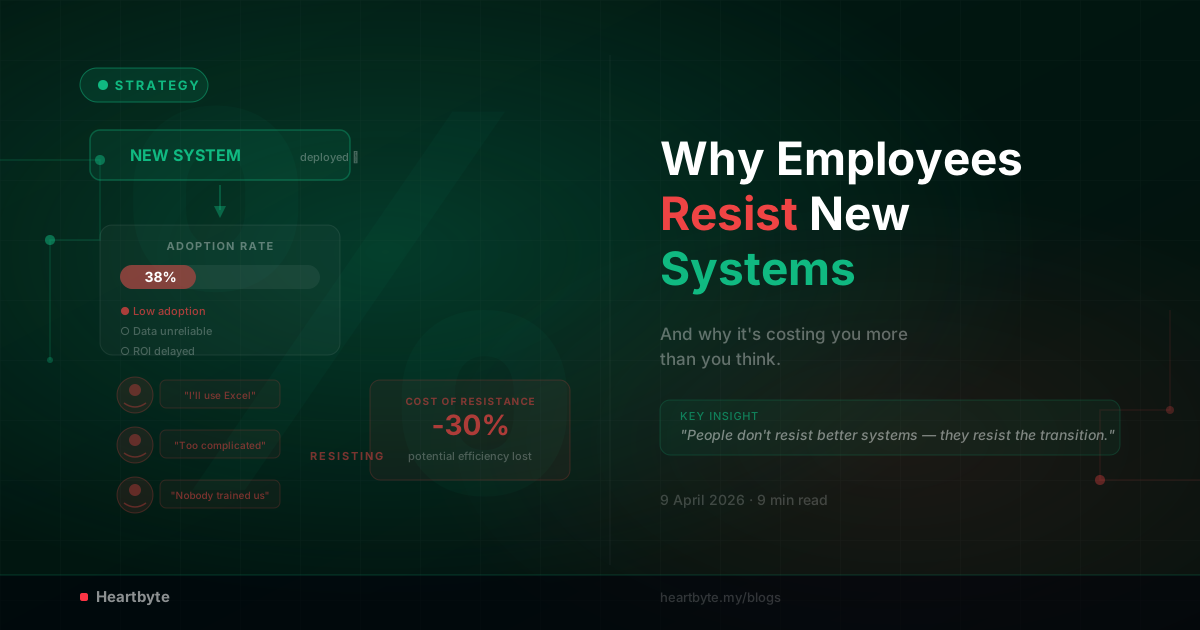
The company just rolled out a new system. On paper it's a clear upgrade. Faster workflows, better structure, less manual work. Management is happy, the vendor delivered on time, and the demo looked great.
Six weeks later, half the team is still using the old spreadsheet. The new system has half the data missing, the reports can't be trusted, and the project that was supposed to "improve efficiency" has turned into money down the drain.
"The system was designed to reduce work — but no one wanted to use it."
This isn't rare. It's what happens to most system rollouts. And the reason usually isn't a bad system. Nobody planned the switch.
The Real Misunderstanding
When management decides to bring in a new system, they're looking at the long game. Time saved, cleaner data, reports that run themselves, lower costs down the road. And they're usually right. The system will deliver all that, eventually.
But your staff don't feel the long game on day one. They feel the mess. A job that used to take three minutes now takes fifteen. They don't know where the buttons are. The logic feels off. And nobody told them why their old way had to go.
Two very different perspectives:
Management sees
- ✓ Long-term efficiency
- ✓ Better data and reporting
- ✓ Reduced costs over time
- ✓ Structured workflows
Employees feel
- ✗ Short-term disruption
- ✗ Loss of speed and confidence
- ✗ More effort, not less
- ✗ Unfamiliar interface
"People don't resist better systems — they resist the transition."
This matters. If you think the problem is the system, you'll keep shopping for a better one. Once you see the problem is the switch itself, you can fix it without replacing anything.
Why Employees Actually Resist
When staff push back, it's usually not laziness or stubbornness. It's a fair reaction to a change that was handled badly. Look at what's really going on:
Short-term pain vs long-term gain
The new system means learning, adjusting, and breaking old habits. Even if it saves work later, day one feels harder than the day before. Your staff can't think in quarters. They have jobs to finish today, and today the new system is slower.
Loss of familiarity
The old way was muscle memory. They could do it without thinking. The new system makes them think about every step. Where to click, what to fill in, how the flow works. All that thinking slows them down, even when the new system is better. That drag is real, and it wears people out.
Lack of ownership
The system was handed to them, not built with them. Nobody asked them what they needed. They didn't check the workflow or test it before launch. So they don't trust it, and why would they? It's someone else's answer to someone else's problem.
Invisible benefits
Management sees the dashboards and the reports. But the people using it every day don't feel any time saved at first. The benefits are real, they just can't see them while they work. If the people doing the job can't feel things getting better early on, they push back.
The trust gap
Staff think: "This is to watch us." "This will make things harder." "This is just another tool management bought that we'll drop in six months." Even if none of that is true, what people believe matters more than what you meant. If the rollout doesn't deal with these worries head-on, they grow.
The Real Cost of Resistance
Most companies treat low adoption as a small annoyance, a training problem that'll fix itself. It doesn't fix itself. And it's not some soft number you can ignore. It hits you in ways you can count.
What employee resistance actually costs:
Slower adoption means delayed ROI
Every month the system sits half-used, you're paying for a tool that isn't earning its keep. The payback that should take months stretches into years, or never shows up at all.
Data becomes unreliable
When half the team uses the system and the other half doesn't, your data has holes in it. The reports are wrong. The decisions you make off that data are wrong too. Now the system is leading you the wrong way.
The business never reaches the efficiency phase
The whole point of the system was to run smoother. But if not everyone uses it, you're stuck running both at once. Old process and new system side by side, doubling the work instead of cutting it in half.
"The system can reduce 30% of the work — but only if people actually use it."
What Companies Get Wrong
The pattern is always the same. Companies pour money into the system itself. Features, integrations, customisation, delivery. Then they spend almost nothing on how that system gets put in front of the people who'll use it every day.
What companies focus on:
- ▸ Features and specifications
- ▸ Vendor selection and delivery
- ▸ Technical integration
- ▸ Go-live date
What they ignore:
- ▸ Transition experience
- ▸ User onboarding flow
- ▸ Day-one user experience
- ▸ Adoption measurement
"A good system badly introduced will still fail."
This is the blind spot. The system might be great, and the vendor might have built exactly what was asked for. But if nobody thought about how the people on the other end would feel the switch, if nobody planned it, the system just sits there. Finished on paper, unused in practice.
What Actually Works
Getting people to adopt a system isn't a mystery. It's not about forcing them or running more training sessions either. It comes down to planning the switch with the same care you put into building the system.
Reduce the transition friction
Make the first go simple. Don't drop people into a full system on day one. Start with the one or two things they do most. Let them get comfortable before you add the rest. That first impression sets the tone for everything after.
Show immediate wins
Find the small, obvious wins and show them early. If the new system saves someone from re-typing the same data, show them that on day one. If it fills in a form that used to take five minutes, make sure they see it in the first session. Early wins build momentum.
Involve real users early
Not just to gather requirements, but to check the thing actually works for them. Let them test the workflow before it's locked in, and let them flag what feels wrong. When people help shape the system, they want it to win. That sense of ownership kills the pushback.
Respect existing workflows
Don't force big change overnight. The old way is there for a reason. It's what people know, and it mostly works. Improve it instead of tearing it down. The best switches feel like an upgrade to something people already know, and when the new system respects what came before, people take to it on their own.
Measure adoption, not just completion
A system that's been delivered isn't the same as one that works. A system that's live but unused has failed, no matter what the invoice says. Track what people actually do: logins, finished tasks, how much data gets entered. If few people are using it, fix the switch. Don't blame the team.
Efficiency Is Only Real When People Adopt It
A system that's live with 40% of the team using it isn't a win. It's an expensive experiment. The features don't matter if nobody uses them. The reports don't matter if the data behind them has holes. And the payback numbers fall apart when the timeline keeps stretching because the team hasn't fully moved over.
The companies that win with new systems aren't the ones that buy the best software. They're the ones that put real work into the switch. They plan the onboarding, they bring in the users, they make the first go feel easier instead of harder, and they track adoption as seriously as they track delivery.
A good system has to cut work and feel easier from the start. Until it does, all that efficiency is just a promise on paper.
"Efficiency is only real when people adopt it. Until then, it's just potential."
Building a system people will actually use?
We build custom systems around how your team actually works, not management wish lists. User-first design, zero change request fees, and switch support built in from day one.
Talk to Us About Your ProjectHeartbyte Team
Heartbyte is a bespoke software development company based in Malaysia. We build web, mobile, and custom software for ambitious businesses — with 15+ years of combined engineering experience and zero change request fees, guaranteed.